
Description
The Story Behind HEKA
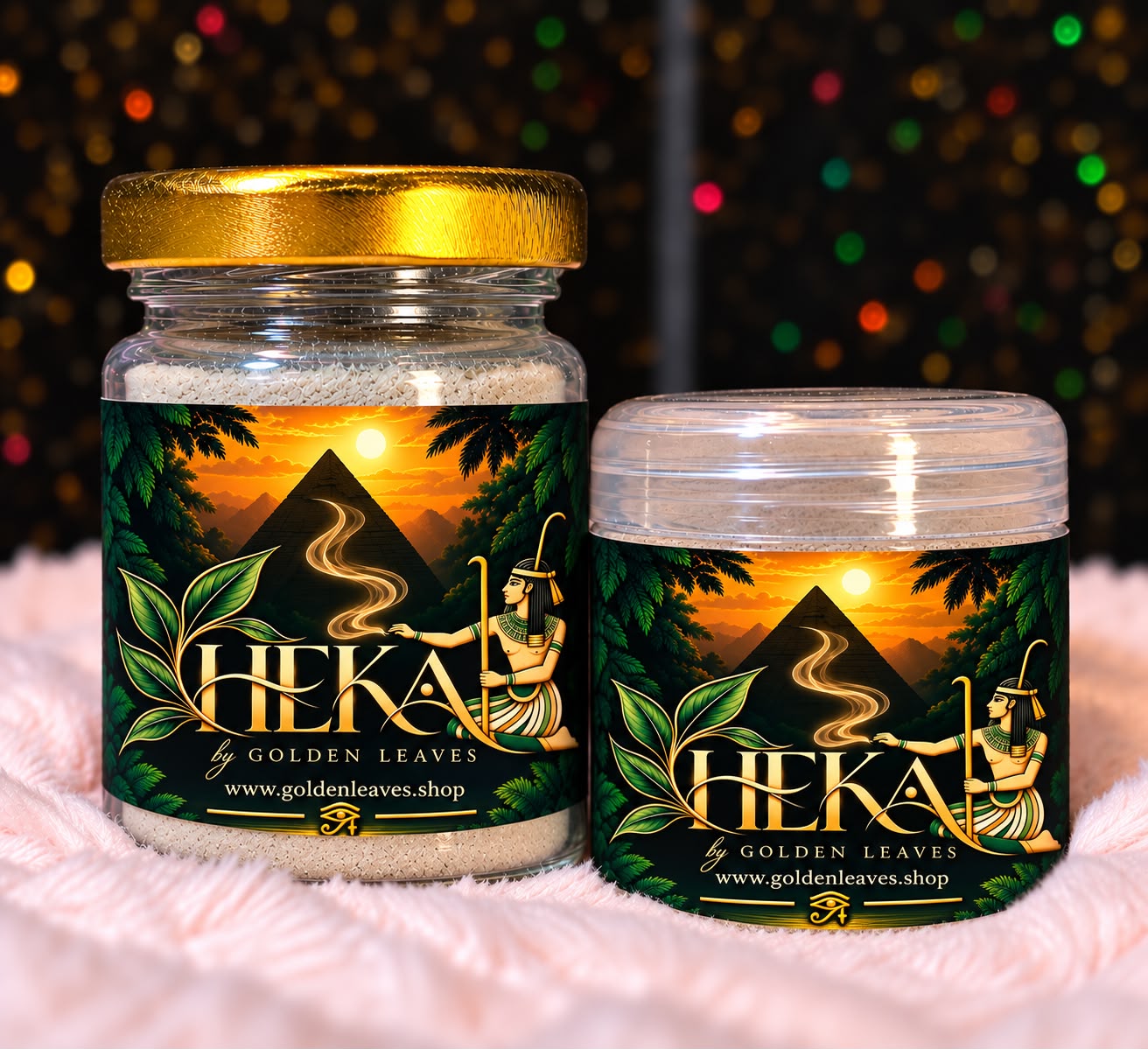
HEKA by Golden Leaves takes its name from the ancient Egyptian concept of Heka, a word associated with sacred power, ritual practice, and the unseen forces believed to connect life, nature and spirit.
Hapé (also commonly written Rapé) is a traditional Amazonian botanical snuff used ceremonially by Indigenous peoples of the Amazon. Traditionally, finely prepared plant material is administered through the nostrils using a pipe, often as part of prayer, ceremony, meditation or other spiritual practices. Different blends can contain different plants and are prepared according to particular cultural traditions.
For us, the connection between Heka and Hapé is about intention and ritual.
Heka represents the ancient Egyptian idea of working with sacred power and intention, while Hapé carries a long-standing tradition of ceremonial plant use and connection with breath, nature and spiritual practice.
Why we chose the name HEKA
We wanted a name that represented more than simply a product.
HEKA reflects our appreciation for ancient traditions, botanical knowledge and the idea that plants have been incorporated into human ritual and ceremony for thousands of years.
HEKA by Golden Leaves therefore brings together two ideas from different ancient traditions:
HEKA — sacred power & ritual
HAPÉ — botanical tradition & ceremonial practice
The name is our way of acknowledging that deeper connection while creating something distinctly Golden Leaves.
Please check out the video below:
Reviews
There are no reviews yet